
The modern fuel debate is framed as a crisis of scarcity and emissions. But it is also, quietly, a story of how we took a remarkably flexible technology and constrained it into dependence on a single global supply chain.
The Original Idea
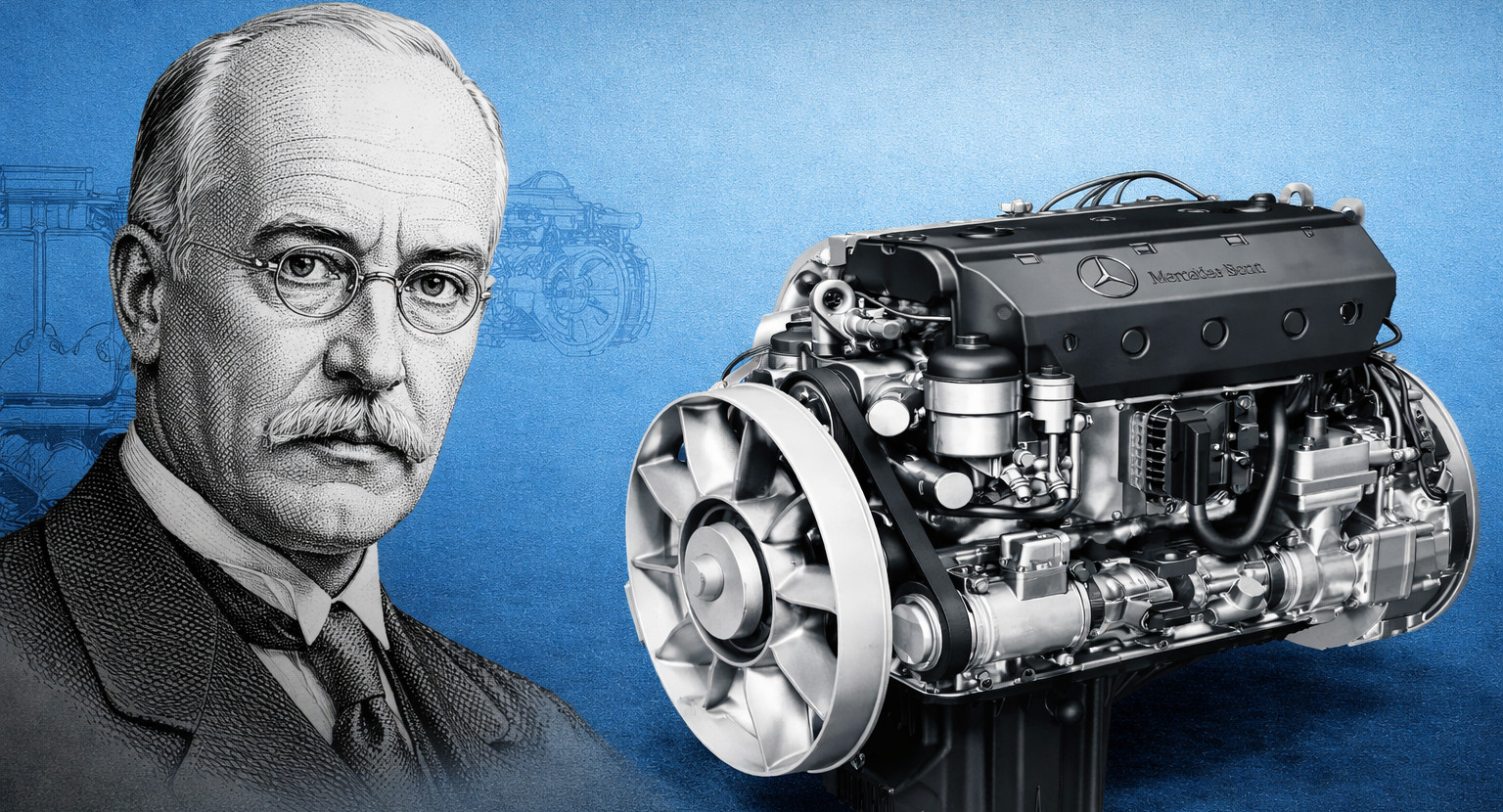
When Rudolf Diesel demonstrated his engine at the 1900 Paris Exhibition, it ran on peanut oil. Not as a stunt, but as proof of concept.
Diesel’s vision was not tied to petroleum. It was decentralised. Farmers could grow fuel. Regions could power themselves. The engine was designed to run on a range of heavy oils — whatever was locally available.
The diesel engine was never meant to be married to crude oil.
Why Old Diesels Run on “Anything”
Older diesel engines — mechanical, low-pressure, tolerant — reflect that original philosophy. They rely on robust injection systems and relatively simple combustion characteristics.
Fuels like vegetable oil, waste oil, or biodiesel can work because:
- Injection pressures are lower
- Tolerances are looser
- Fuel systems are mechanically driven
- There are no complex emissions systems to satisfy
These engines do not demand perfection. They demand combustion.
The Modern Diesel Constraint
Modern diesel engines are a different machine entirely. High-pressure common rail systems operate at extreme tolerances. Emissions regulations have introduced layers of complexity.
Systems like AdBlue exist not to make engines run, but to make them comply.
AdBlue works by injecting urea into exhaust gases to reduce nitrogen oxides. Effective, but it comes at a cost:
- Additional fluid dependency
- Sensors and failure points
- Reduced fuel flexibility
We did not make engines cleaner. We made them more dependent.
Petrol, Performance, and Synthetic Fuels
Petrol engines tell a parallel story. High-performance engines already benefit from high-octane fuels. Synthetic fuels — often called e-fuels — offer consistency and purity that conventional petrol cannot.
These fuels are made by combining captured carbon dioxide with hydrogen, producing hydrocarbons that closely resemble traditional petrol.
The result is a cleaner-burning fuel that integrates seamlessly with existing engines — often improving combustion stability and performance.
The Geography of Fuel
Today’s fuel system is geographically absurd. Crude oil is extracted in one country, shipped across oceans, refined in another, then distributed globally.
Each step adds cost, risk, and dependency.
Synthetic fuels change that equation entirely.
Instead of moving crude, we can move:
- Electricity
- Hydrogen
- Captured carbon
Or better still, produce fuel locally.
The future of fuel is not global. It is regional.
Closing the Loop
Combine the ideas and a pattern emerges.
Capture carbon dioxide. Produce hydrogen. Create methanol. Convert vegetable oils into biodiesel. Or synthesise petrol directly.
Burn the fuel. Capture the emissions. Repeat.
Not zero emissions — but circular emissions.
The Missed Opportunity
For over a century, we moved away from Diesel’s original idea of fuel independence. We centralised production, standardised fuels, and optimised for global trade.
Now, faced with supply instability and environmental pressure, we are rediscovering what was already known:
Engines can run on far more than we allow them to.
Conclusion
The future of fuel does not require abandoning the internal combustion engine. It requires rethinking what we put into it.
From peanut oil to synthetic petrol, the path is not new. It is simply unfinished.
The real question is not whether the technology exists. It is whether we are prepared to use it.