
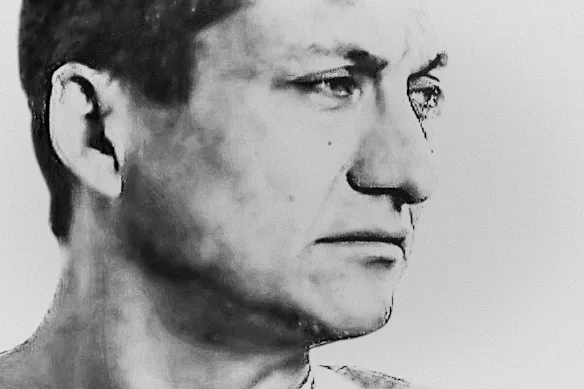
There are moments where the system doesn’t just fail — it walks directly into the outcome it should have seen coming.
The case of Dezi Freeman sits squarely in that uncomfortable space.
We are told there were “historic child sexual offence” allegations. Serious words. Heavy words. The kind that demand investigation. No argument there.
But beyond the label, the public has been given almost nothing. No clear timeline. No detail. No context. Just a category — and a warrant.
And that’s where the question begins.
What exactly were they expecting to find?
A search warrant is not a fishing expedition — at least, it shouldn’t be. It implies a belief that evidence exists, somewhere specific, waiting to be found.
So what was the expectation?
- Digital material?
- Physical evidence from an alleged historic incident?
- Something recent enough to still exist, yet old enough to be called “historic”?
These aren’t idle questions. They go to the heart of proportionality — the quiet principle that determines whether law enforcement actions are measured, or merely procedural.
A man known to resist authority
Freeman was not an unknown quantity.
By all accounts, he held a deep distrust — even hostility — toward authority. The kind of individual who does not respond predictably to uniforms, warrants, or commands.
That background matters. Because policing is not just about legality — it’s about outcome.
When you approach a volatile individual with a high-friction action like a search warrant, you are not just executing paperwork. You are triggering a chain of events.
And those events are often entirely foreseeable.
The mismatch
On one side: a vaguely described, historic allegation.
On the other: a known anti-authority personality living off-grid, in a bus, in rural isolation.
The question is not whether the law allowed the warrant.
The question is whether anyone paused to ask:
“Is this the right way to pursue this — and what happens next?”
Because the answer, in hindsight, appears brutally obvious.
Process vs judgement
Institutions often hide behind process. If the boxes are ticked, the action proceeds.
But process without judgement is how you turn a low-visibility allegation into a national incident.
A warrant becomes a confrontation.
A confrontation becomes an escalation.
And escalation, once underway, has no interest in nuance.
The uncomfortable question
None of this diminishes the seriousness of allegations involving minors. They must be investigated — properly.
But “properly” does not mean blindly.
It means asking:
- What is the evidence we expect to recover?
- Is this the least escalatory way to obtain it?
- Are we dealing with a person likely to comply — or combust?
These are not philosophical questions. They are operational ones.
When outcomes are predictable
The tragedy here is not just what happened — it’s that, to many observers, it feels like something that could have been anticipated.
A high-friction tactic applied to a high-resistance individual, over a low-visibility allegation, with unclear evidentiary payoff.
That equation rarely ends quietly.
And yet, it was pursued anyway.
Final thought
The law asks whether something can be done.
Wisdom asks whether it should be done that way.
In this case, those two questions appear to have parted company — with consequences that speak for themselves.